About Us
Restoring Civil Society as an Essential Actor of World Peace
Friends of Peace was born as the initiative of a group of friends in Geneva, Switzerland, who want to forward the ideal of peace among nations.
Grass-root, non-political and democratic in nature, our movement is formed of individuals from all nations and walks of life, who represent the civil society.
Our belief is that Peace cannot be decreed; it must be built collectively and maintained.
Every individual is welcome to participate, regardless of continent, age, social condition, political culture or affiliation, gender, as well as beliefs, spiritual or secular.
Where Do Peace Societies Come From?
The tradition of peace, and the recognition that humanity forms a community of brotherhood, have deep roots in all continents of this planet, notably in Africa and Asia.
Modern peace societies started at the end of the eighteenth century in Europe and the Americas.
Origins
- One of the first to operate at a broad level, since the 17th century, was the Religious Society of Friends (the Quakers), who had witnessed that wars among men were caused by greed and egoism.2
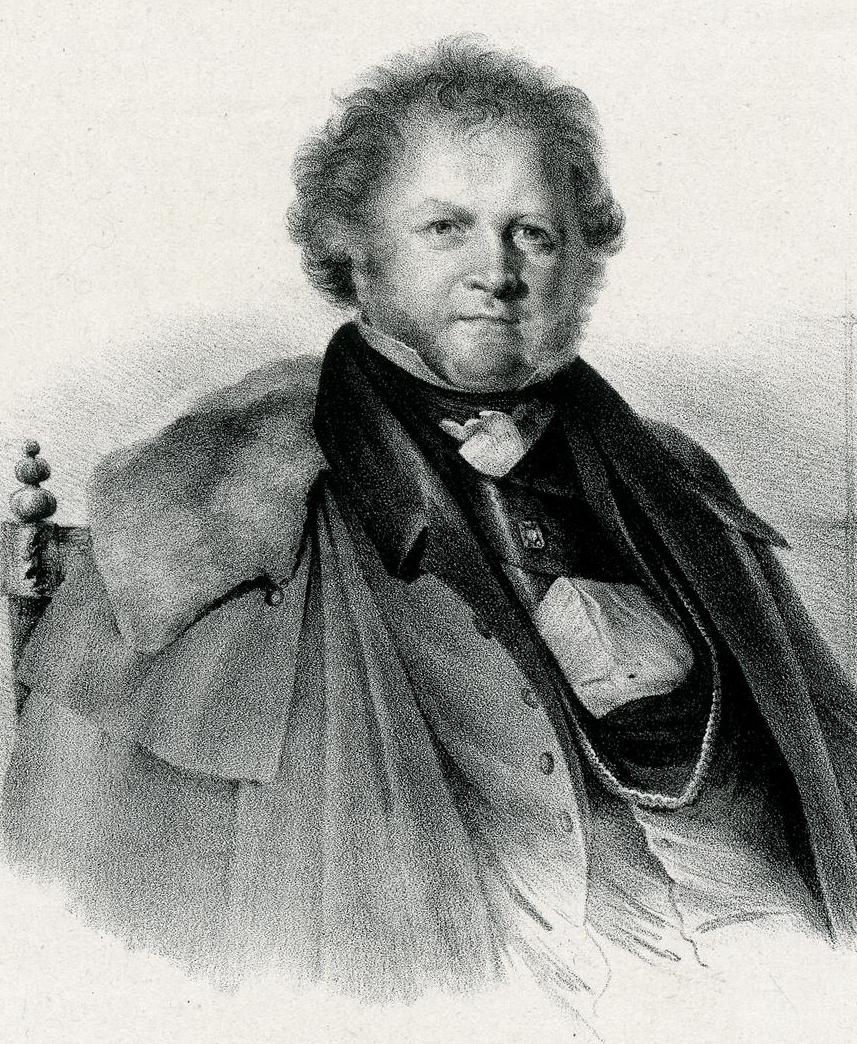
- The Peace Society of Geneva was founded in 1830 by a Swiss writer and philanthropist, Jean-Jacques de Sellon.
-
The first Congress of Peace, organized by the London Peace Society and the American Peace Society met in London in 1843.
-
The French writer and poet Victor Hugo made a famous speech at the Paris Peace Conference of 1849 where he declared that “one day we will show canons in museums in the same way as torture instruments, wondering how that could have existed!”.
-
Peace societies sought to end wars in Europe, by promoting a peace alliance between all states of the continent. They worked to end colonial wars and slavery; at the turn of the twentieth century, they took firm stances in favor of the political rights of women.
-
Between 1919 and 1939, peace societies played a role in inspiring or supporting the League of Nations. They participated in the Spirit of Geneva. It was the first conscious attempt at establishing a better world order where lasting peace could exist. In a world still dominated by colonial powers, sovereign countries acquired the right to make their voice respectfully heard by the world’s community of nations, in a spirit of equality of rights.
Decline after World War II
-
Unfortunately, ‘unifying’ ideologies of race or ethnicity, serving imperial aims, devaluated whole peoples and cultures; they subjugated, deported and even destroyed them. They defeated the aims of peace societies and of the League of Nations, by causing World War II.
-
In 1949 a great step forward was taken with the Universal Declaration of Human Rights.
-
Unfortunately, the role of Peace Societies declined greatly with the start of the Cold War between the United States and the Soviet Union, the advent of nuclear bombs and the start of the Balance of Terror.
-
It seemed that, in front of the new circumstances, there was nothing that private individuals could do any longer, for the cause of world peace. The emphasis was shifted on the United Nations and international organizations.
-
From the 1950s, almost all peace societies disappeared or fell into irrelevance.
Why Are Peace Societies Needed Again?
Today again, political short-sightedness, prejudice and revanchism are preventing the emergence of lasting peace in the world.
Alas, the most destructive recent conflicts were not caused by smaller and peripheral countries; but by a small club of great powers.
In the early 2020s, a new arms race started: it is producing new weapons that are too destructive for our planet and threaten the survival of mankind. Hence the question: who will watch the watchmen?
The answer is: private persons of the civil society who will take that responsibility upon themselves.
The big idea behind Peace Societies, the peaceful answer to differences among human beings, will be bottom-up (start from a grass-root movement). Peace societies have long considered that the practice of peace and tolerance was a civic virtue of courage; and that ceding to greed, prejudice, anger, or fear is not political strength, but weakness.
Toward Lasting Peace
Friends of Peace forwards the idea that lasting peace and true security for everyone will only be achieved through reconciliation and friendship, among individuals and groups.
Conversely, pursuing “security” by restricting the liberties of citizens, or by compromising the sovereignty of other states, is a delusion that leads (at best) to arms races and frozen conflicts; as well as civil disorders and poverty.
We welcome Friends of Peace from every continent, so that:
- The aim of a lasting world peace can be maintained alive and developed.
- They could provide a helping hand in the resolution of wars and internal conflicts.
- All great powers will always be strongly reminded of their sacred duty to perform their part to safeguard world peace, human rights, and the welfare of humankind.
Legal Status
The Friends of Peace (Amis de la Paix) is a Swiss association formed pursuant to Articles 60–79 of the Civil Code.
-
Original painting by Angeliki Kourkoulou. ↩
-
Today, Quakers are still active and have an United Nations Office in Geneva. ↩